Category Archives: Conversations That Matter

Communicate effectively through multiple channels

The use of email is still a main driver for miscommunication within the workplace. People simply rely too much on it for their communication, or rather they rely too much on it as the main channel for workplace communication.

Given that up to 90% of the written word is interpreted by the recipient of the message, email is a risky channel of communication especially when the author of the message suspects that it has a high chance of being interpreted negatively.

Yet people continue to press ‘send’. And again and again and again. And they wonder why their workplace relationships suffer. And they wonder why performance suffers when negative energy is wasted on unnecessary miscommunication.

Communicating any message by a single channel is risky business. And even riskier when the message has a high probability of being misinterpreted.

Unless you are deliberately intending for someone to read a negative message from your email, then it is best to use multiple communication channels to send your message.

A communication channel is a means through which a message is sent. It could be verbal, a text message, an email, a video, a presentation, an audio recording, a website, a blog – the list of possible channels is virtually limitless.

When you have a potentially difficult issue to convey speak to the person or people to whom you wish to convey your message first. This can be in person or at least over the phone. It is after you have conveyed your message via a verbal format that you should then follow up with an email, simply highlighting the key aspects of your verbal conversation.

This simple technique of using multiple channels to convey your message will significantly decrease the chances that the recipient of your message will misinterpret your intentions. Business relationships won’t suffer and performance won’t be reduced. A little care and forethought goes a long way.

What is your experience of using multiple channels to more effectively communicate your messages in the workplace?

Gary Ryan enables individuals, teams and organisations to matter.
Visit Gary at http://garyryans.com

How to use illustrations to create Conversations That Matter®

Creating Conversations That Matter® is a key skill for organisational leaders. Amidst forecasting, attending to meetings and writing reports, the development of this skill is often neglected. Think about it, how do you stimulate Conversations That Matter® with your peers, direct reports and your leaders? How do you stimulate them with your key stakeholders and clients?

Conversations That Matter® are conversations where people are able to speak from the heart, speak their truth (whatever it may be) in a safe environment where there will not be negative consequences for speaking their mind. This does not mean that people lose responsibility for what they say. Rather, their responsibility increases as respect is a core requirement for a conversation that matters to be conducted.

So how might a leader create a conversation that matters, especially when there may be a level of distrust present amongst team members?

One way is to use illustrations to catalyse your conversations. For these conversations to be successful, the leader must be prepared to do the following five practices:

1. Be prepared to ‘listen to understand’ to what is being said, rather than listening to defend/justify
2. Guarantee that no negative consequences will result to people as a result of the conversation
3. Listen more than speak – a good rule of thumb to follow is to speak 30% and to listen 70% of the time
4. Be prepared to ask open questions (see The Art of Skilful Questions)
5. Judge the quality of the conversation by the level of truth that is present in the conversation (see the video Transparency – How leaders create a culture of candor)

If you are able to follow the five practices above, then determine the focus of your conversation, then select an image that you could use and give it a go. As an example a great friend of ours Jock MacNeish has been creating such illustrations for the best part of his life. Over time Jock has created many illustrations for us and the 0 to 10 Relationship Management body of knowledge. As Licensed Elite Trainer Facilitators in 0 to10 Relationship Management, Andrew and I are able to use Jock’s illustrations.

The 0 to 10 Relationship Management Culture Survey illustrations are very powerful catalysts for enabling people to have a conversation that matters. If you were interested to know what your team members thought about the level of autonomy that they had in their jobs, you could place the illustration below on the table and ask them to mark on the scale where they believe the level currently sits.

When people place their finger on the scale that they believe represents their view, simply say, “Thank you for your honesty. What examples do you have that would help me to understand what this score means to you?”

Their answers will be powerful and enable you to identify what you should keep doing, start doing and stop doing. If, of course, you have tried this technique and no-one in your team spoke up, then you may have your answer anyway!

On the other hand if you’ve never tried this technique before please give it a go. Either print the illustration from this article or select a different onee for your team and create a conversation that matters. Please let us know how you go!

Finally, if you like this concept but aren’t sure what illustration to use, please provide a brief description of your issue in the comments box and I’ll help you find an appropriate illustration.

As a leader a significant part of your success is driven by your capacity to create and stimulate conversations that matter. Is this a skill that you possess? What are you currently doing to develop it?

Please feel free to ask questions and/or to make comments about this article.

Gary Ryan enables individuals, teams and organisations to matter.
Visit Gary at http://garyryans.com

A structure for creating Meetings That Matter

Ron Ashkenas, author of The Boundaryless Organization reports that most managers believe that the majority of meetings are inefficient. Despite ‘knowing’ how to conduct effective meetings they continue to practice ineffective ones.

Ashkenas offers three reasons for this behaviour:

  1. Meetings offer the opportunity for social interaction
  2. Meetings are a practical way of keeping everyone in the loop
  3. Meeting can represent a certain level of status having been attained

He provides the basic tenets of an efficient meeting to be:
“Be clear about what you want to accomplish; invite the right people; send out pre-reading in advance; have an agenda and follow it with discipline; send out notes with key decisions and action steps.”

From my experience one of the problems with the prescribed successful meeting process is that people are too busy to do the required pre-reading. In fact, most managers have reported to me that they don’t have the time to pre-read the prescribed agenda. This is something they do on the way to the meeting or when they first get there.

Managers have also reported to me that they don’t focus on the content of the meeting “…until I am there.”, especially when they are travelling from one meeting to the next.

In this context it seems near impossible to create efficient meetings. Thankfully there is a way, but it will take some of you some time to get used to the ‘instant formality’ that the process creates.Organisations That Matter, Gary Ryan, Yes For Success, Leadership, Plan for personal success

Step 1: Provide an opportunity for staff to ‘check in’ at the start of the meeting (keep it short)
Efficient meetings require all present to be ‘present’ during the meeting. Wandering minds don’t aid efficiency. The purpose of the ‘check in’ is to allow team members to psychologically separate from what was going on before the meeting to focusing on the meeting that is happening ‘now’.

A ‘check in’ can be a single word where everyone is asked to share how they are at that moment through to just those feeling the need to share a recent experience that may be on their mind (e.g. I nearly had a car accident on the way here).

Step 2: Clarify the purpose of the meeting
Even if this is a regular meeting, remind people why it still matters. If the meeting no longer matters then you shouldn’t be wasting your time conducting it!

Step 3: Collectively set the agenda
Publicly create the agenda. A whiteboard is perfect for this task (remember there is power in the whiteboard marker, so while you are teaching people this method it is best to be the ‘scribe’).

Accept all suggestions from all team members. Then select the most important items that need to be addressed today. It is okay to use your positional authority as necessary when completing this task.

Literally place numbers beside each item as you prioritise them.

Next allocate approximate time slots for each agenda item that you have agreed to talk about. These time slots do not need to be equal – they need to be relevant to the importance of the agenda item and how long (in the available time) you have to discuss the item.

Step 4: Set a time-keeper
A team member will need to take on the role of time-keeper. It is amazing how often the simple statement that we have used our available time on an item results in the discussion ending. Please note that this role can (and probably should) move around the team members from one meeting to the next.

Step 5: Make a record of the meeting
Create meeting notes that highlight the agreed agenda and any actions that result from each item. This can be done by using the left hand side of the whiteboard and recording the actions as they arise throughout your meeting. Share the meeting notes in a timely fashion. This can be done by using your smartphone to take a photo of the Action Items and then immediately distribute the photo to all team members. You can leave the meeting without any extra administration tasks to be completed!

Step 6: Reflect on the meeting skills displayed throughout the meeting
This step spends a few minutes providing the opportunity to team members to talk about their thoughts about how well meeting skills were displayed by the team members. Comments such as, “Joan asked a lot of powerful questions today. Especially when she asked me about the most powerful benefits for the organisation that my suggestion would provide. It really made me stop and think more clearly about why this project matters.” provide an example of what might be said during the reflection.

That’s it. Like anything new this six step approach will feel strange at first, but you will get used to it.

Please feel free to ask questions about any of the six steps outlined above.

Please note that this article was catalysed by a recent conversation with one of my Executive Coaching clients. Thanks Elise!

Gary Ryan enables talented professionals, their teams and organisations to Move Beyond Being Good.
View a TedX Talk by Gary here.

Service excellence requires measuring and responding

A fundamental aspect of service excellence is the tools that an organisation uses to measure how it is performing.

In this context the Service Standards that form the basic building blocks of the organisations systems and processes have to be able to be measured. At their highest level organisations should be able to recognise how they are performing at each of the six key drivers of service excellence and each local team should be able to do likewise.

The capacity to appropriately respond to what the measurements are telling an organisation is also critical for service excellence. This means that your measurement systems must be time bound so that the information is current and therefore useful. Some measurements will be lag indicators of activities that have been completed in the past, while other measurements will provide lead indicators identifying where a particular aspect of your service strategy is headed into the future.

A lag indicator may be your sales results for the past month. A lead indicator may be the number of customer ‘contacts’ you have ‘alive’ in your marketing funnel which will act as an indicator for how many sales you may make the following month.

How do you measure your service standards? What lead and lag indicators are you using?

Copyright Gary Ryan 2011

Research Participant
It wasn’t until we started to look at our service strategy and ask ourselves whether or not we were measuring what was really important to us that we started to improve. We had promised people that we would get back to them within 24 hours but we didn’t have a clue whether or not we were achieving that standard. To our horror we discovered that our response time was more like 36 hours than 24 hours. It took us about three months but we eventually got our average down to 10 hours, well ahead of the base standard that we had set.

Please feel free to use this article to stimulate Conversations That Matter® within your organisation.

Gary Ryan enables individuals, teams and organisations to matter.
Visit Gary at http://garyryans.com

Awkward Workplace Conversations

Thank you to those of you who contacted me because you had seen my contribution to James Adonis’ article on awkward conversations in the workplace (which you can read here.).

It is my strong view that many, if not most awkward conversations in the workplace are made significantly easier if agreed behaviours have been created (and kept alive) throughout a team’s journey. It really does make discussing inappropriate behaviour so much easier because you have your agreed behaviours to which you can refer.

An important point to note is that often we have to experience our agreed behaviours before everyone really does establish a shared meaning for them. As an example some teams that I have worked with have included ‘having fun’ as one of their behaviours. Clearly this can be open to a lot of interpretation. What is fun for some, may not be for others!

This means that you have to experience your agreed behaviours and every once in a while, say once a month, discuss explicit examples of your agreed behaviours in action, including behaviours that you aren’t sure if they fit the intention of your behaviours. These ‘Conversations That Matter®’ don’t have to be long. They can be around 10 minutes which is a small amount of time given the benefits to a team of being on the same page from a behavioural perspective.

Please give the concept a go and share your examples and challenges with our community.

Gary Ryan enables individuals, teams and organisations to matter.
Visit Gary at http://garyryans.com

Why the development & recruitment of people lies at the heart of your service strategy

Existing staff need to be developed so that they have the capacity to implement your Service Strategy. This will result in them having the capacity to understand the expectations of their customers and being able to develop appropriate service standards from that understanding.

New staff need to be recruited through processes that identify their alignment with your Service Strategy. This means that the organisation’s recruitment processes must reflect a process that is seeking the best possible people that it can find so that its Service Strategy can be implemented.

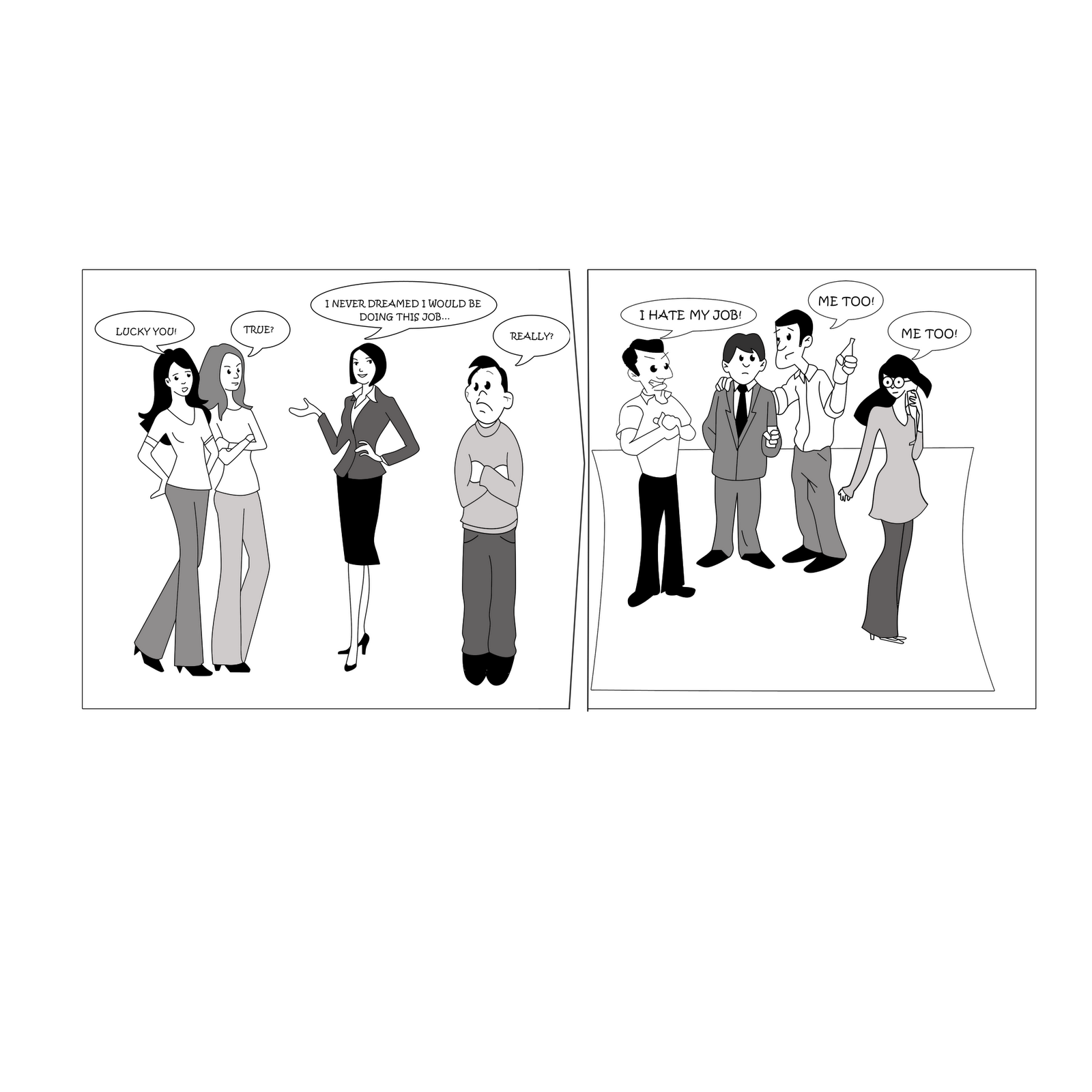
The result is a virtuous cycle that re-enforces great service. When people love their work they attract other high quality to want to work with them too. The reverse is also true. The wrong people in the wrong jobs who end up hating what they do don’t provide great service. How could they!

How do your development and recuitment practices support the establishment of a virtuous cycle for great service in your organisation?

Why not use this article to stimulate Conversations That Matter® with your team.


©Copyright Gary Ryan 2011

Research Participant
Our recruitment policy used to be, “Do you know anyone who has a heartbeat and is available?”. Me, I’d been here 20 years and had never been on any training. I never realised how bad we were until I honestly thought about whether I’d like to be a customer of my own team. My answer was no!

Gary Ryan enables individuals, teams and organisations to matter.
Visit Gary at http://garyryans.com