Category Archives: Leadership

Is the word ‘customer’ right for you?

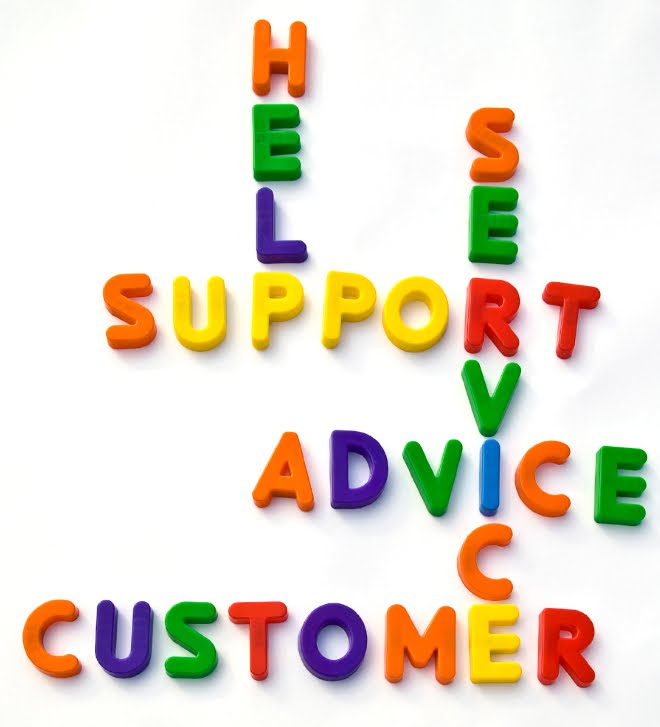
Many people get hung up on the word ‘customer’. This is the challenge with the concept of ‘customer service’ because many people don’t think that they have customers. And maybe they don’t. Maybe they have clients, colleagues, administrators, staff, stakeholders, lawyers, doctors, labourers, community members, students, guests and any other label that you can think about. The issue is not the label; the issue is the ethic behind how you treat people.

This is why we prefer the term, “service excellence” over “customer service”. Unfortunately because many people don’t think that they have customers (because they use a different term) they think that service has nothing to do with them. But it has everything thing to do with them. Everyone is your customer. Everyone.

Quote from a research participant
“You know that I can’t stand the word ‘customer’. The people I serve are staff, not customers. I find out what they want and I do my best to exceed their expectations every time. So I wish people would stop saying that I have to be ‘customer’ oriented. I’m staff oriented and that is what is important!”

What words do you use to describe your ‘customers’?

Gary Ryan enables individuals, teams and organisations to matter.
Visit Gary at http://garyryans.com

How ‘5 Stars’ and ‘2 Stars’ can both provide examples of great service, or not!

Many people think that good service is only provided ‘at the top end’ of the service star scale. In other words, if I’m running a 2 star motel then only a low level of service should be provided. In the context of WHAT is provided and WHAT is paid, this is true. But the service experience can still be above expectations. For example, the person greeting me may be genuinely happy to check me into my room. When provided directions to my room I am asked if I am interested in knowing where some cheap but good quality food can be found. In responding yes to that question I am provided with the appropriate information, which includes a range of discounts should I choose to eat at those places. (Later, when I do choose to eat at the place, my discount is honoured and the food is reasonable for what I have paid for it).

I go to my room, the key works and my room is fresh and clean. I have asked for a non-smoking room and there is no evidence that the last person who used it smoked like a chimney. The information booklet is up to date and includes relevant information about public transport, taxis, health clubs and eateries. When I check out the staff member is courteous, quickly processes my payment and bids me farewell. If you wish to consider a poor ‘2 Star’ experience, simply go back over this story and reverse each experience that has been described.

It would not be very difficult to translate this ‘2 Star’ story into a ‘5 Star’ story. The differences in the experience will relate to what we have paid and what we then expect to receive in return. The room may be bigger. The location may be more convenient. The bed may be bigger with higher quality linen. Internet access may be available. The fixtures and fittings may be of higher quality. An on-site restaurant and 24 hour in room service may be available. Laundry services may be available and a concierge service may be available to assist us with any needs or enquiries that we may have regarding the hotel of surrounding area.

Each ‘Moment of Truth’ (MoM) can contribute to our expectations not being met if the experience of the MoM is not up to our expectations. In this way, 2 Star service can be great service and 5 Star service can be poor service. It all depends on the perceived experience of the customer.

Quote
“Visits are not limited to the public areas. I head for the heart of the house, too. There’s method to my madness. If I see smiling faces and well-scrubbed surfaces behind the scenes, I know that the rest of the hotel more than likely is doing just fine.” (J.W.Marriott Jr from his book, ‘The Spirit to Serve’)

What are your thoughts on this topic?

Gary Ryan enables individuals, teams and organisations to matter.
Visit Gary at http://garyryans.com

Service excellence involves exceeding expectations

People expect good service. Period. Often, their expectations are not met. Too often. Just think about your own experiences as a customer. How often are your expectations met? How often are they exceeded? Customers expect their expectations to be met. You expect your pay to arrive when it is due. You expect your food to be delivered as ordered within a reasonable timeframe and at the appropriate temperature when you order food at a restaurant or cafe. You expect finance reports to be delivered and inclusive of all appropriate information as scheduled. You expect to be treated as a human being when you visit a government agency, education institution or medical facility.

In order to be able to consistently meet expectations, your organisation must aim to exceed expectations. It is likely that there will nearly always be a lag between when you last checked the expectations of those you serve and the actual service that you are providing them. The lag time may include a change in the level of expectations of those you serve. Unless you are aiming to exceed the expectations at the level that you understand them to be, you may not achieve a consistent level of meeting the expectations that you do know exist. This never-ending journey means that exceeding expectations is a challenge. A real challenge. A challenge worthy of your commitment. Is your organisation currently worthy of your commitment? Is your performance worthy of your organisation’s commitment to you?

Quote
“Consistently exceeding the expectations of the customer, personalizing his or her service experience, and continuously improving your product or service so that it creates greater value for the customer produces a level of customer loyalty that cannot be matched by your competitor.”
(Theo Gilbert-Jamison, service excellence expert/author)

Gary Ryan enables individuals, teams and organisations to matter.
Visit Gary at http://garyryans.com

Being told “You’re crazy!” is a good thing!

Have you ever been told that you are crazy for doing what you are doing?

I have. Plenty of times. In fact I’ve had it said to me so many times now I see it as a good thing!

I recall when I first decided to enrol in a post-graduate university program as a part time student, people said, “You’re crazy!”.

When I decided to become the senior coach of a local football team, people said, “You’re crazy!”.

When I decided to study part time at the masters level at university, people said, “You’re crazy!”.

When I decided to form my own business with my business partner, people said, “You’re crazy!”.

When I decided to run my first marathon, people said, “You’re crazy!”.

When I decided to write my first book, people said, “You’re crazy!”.

When I decided to write an ebook and give it away for free, people said, “You’re crazy!”.

When Michelle and I announced that we had our fifth child on the way, people said, “You’re definitely crazy!!”.

When I decided to run a marathon four weeks after having had my appendix removed, yes, you got it, people said, “You’re crazy!”.

This list could go on and on. But it wouldn’t be fair to keep going because I think you understand the message.

I don’t know why people say that you are crazy when you tell them that you are doing something that they can’t see themselves doing, even if they really wanted to do it.

I do know that I have enough evidence to see that statement as a positive. In fact, if people weren’t telling me that I’m crazy then I suspect that I wouldn’t be striving hard enough to create the life that I desire.

You see the only reason that I have done all of the things listed above is that each of those little achievements contribute to me living the life that I desire.

As a simple example the reason why I run marathons is so that I can be healthy and fit for my family. Also I am so busy that if I did not have something as big as a marathon to train for, I might not do any training. It is the very fact that a marathon is what it is that makes me prioritise the time to train. But again my real reason is even bigger than that. I want to be an example of health and fitness for my children, so that I can physically do whatever I want to do with and/or for them.

My eldest son plays both Under 10 and Under 11 Australian Rules Football for our local club. Recently the umpire did not arrive for the start of the U11 game. Fathers were approached to pick up the whistle. They declined. “I can’t do it, I’m not fit enough.” is what I heard them say. I even overheard one father say, “Someone else will do it”.

I raised my hand. “I’ll do it.”

The simple mathematics of the situation was that if someone did not step up to umpire, the game would not happen and the children, including my son, would miss out on a game of football. That’s not an outcome that I want.

I knew that I was fit enough to do it and I also felt confident enough that I knew enough rules to do a reasonable job.

After the game my son thanked me as did many of the other children and their parents. Again, many of them said, “Thankfully you raised your hand because I could never have done that. I’m not fit enough.”

For me, for as much as I can control I never want the statement, “I couldn’t do that because I ‘m not fit enough” to come out of my mouth and stop me from helping out my children. Michelle and I also talk a lot with our children about the importance of showing initiative. Well, I can’t just talk about it, I have to show it too!

I never got up that morning expecting to umpire a game of football. Wearing a shirt, jumper and jeans I was clearly not dressed to umpire. But I didn’t let that stop me either. Who cares if people laughed at how I was dressed or looked or if they thought I was crazy! The important thing was that I was out there having a crack and helping the boys have a game of football.

I can’t even begin to tell you the benefits of having completed each of my post-graduate degrees. Once again  the important outcome has been that I have been able to live more of the life that I (and my family) desire.

I’m not sharing this story because I want accolades. Rather I am sharing it because it is an example of the benefit of taking the time to work on my health and fitness. You never know when opportunities like the one I have described above can pop up, and personally I want to be able to seize them. It is part of the future that I desire and an example of living out my purpose for being healthy and fit.

So, what are your examples of when people have told you that you are crazy?

What have been the benefits of not listening to those people?

Please share your examples with us.

Gary Ryan enables individuals, teams and organisations to matter.
Visit Gary at http://garyryans.com

What sayings guide you on a day to day basis?

Sayings can be very powerful and act as a guide for our lives. Two Australian sayings that I find very powerful and very useful for helping me to live my life are:

  1. ‘Get fair dinkum’; and
  2. ‘Have a crack!’.

‘Get fair dinkum’ means that you need to be honest with yourself. Don’t fool yourself into thinking that everything is okay if it isn’t, and don’t go thinking everything is terrible if it isn’t. Appraise both the good and the bad and most of all, be honest!

This enables you to be honest with others, an important trait for building relationships.

‘Have a crack’ means, ‘to have a go’ or ‘to take action.’ People often miss out on achieving what they want in life because they are afraid of what might go wrong. The saying, ‘have a crack!’ reminds me to focus on what I want to achieve, and to go for it! Usually the worst thing that could happen from having a crack is nowhere near as bad as not being prepared to give yourself a chance of creating whatever it is that you want.

So, get fair dinkum and have a crack!

What sayings guide your life?

Gary Ryan enables individuals, teams and organisations to matter.
Visit Gary at http://garyryans.com

Great service comes in many forms

Service is not just a traditional retail experience. Examples of service include the willingness to allow direct reports to make mistakes so that they can learn (even though you could have done the task faster and to a higher quality yourself). Cleaning up after yourself in the lunch room. Picking up rubbish in the foyer and placing it in the bin. Letting others go first through a doorway. Offering your seat to someone not as healthy as yourself when riding public transport. Listening to a colleague when they just need another human’s ear. These are all simple examples of service. Service can be everywhere and it can be nowhere. How present is service in your life?

Quote from a participant in one of our research programs.
I’ve experienced great service from my parents, from the local convenience store and the volunteers working at the drink stations in the running events that I participate in. I’ve also received great service from high class hotels. Great service is everywhere, if you’re prepared to see it!

Please feel free to add a comment to this article.

Gary Ryan enables individuals, teams and organisations to matter.
Visit Gary at http://garyryans.com

If ‘Everybody’s doing it’ does that make it okay?

The revelations of the systematic cheating by the Melbourne Storm Rugby League Club raises issues that extend far beyond Rugby League and the club itself. Assuming that the reported statement by the Melbourne Storm Chairman Dr Rob Moodie that Brian Waldron, the accused architect of the cheating strategy, told him that he had done what he had done because, “Everybody’s doing it!” is accurate, it raises an issue for all of us. (Please keep in mind that at the point in time of writing this article there is no evidence that Brian Waldron’s statement that everybody else is doing it is accurate.)

As appalling an excuse as this excuse sounds, my view is that many people do use this excuse for their behaviour. Whether it be taking illegal drugs, drinking too much alcohol, backstabbing another person behind their back, not telling your manager or direct reports the truth, people claim that their behaviour is okay because other people are doing it.

To me, leadership starts with yourself. If you can’t lead yourself, then you are going to struggle to lead other people. As we have seen with Brian Waldron many people would have considered him successful up until Thursday afternoon. After all he had guided the Melbourne Storm through a period of apparent on-field and off-field success. This story highlights that there are consequences for not taking a stand for doing what is right. It may be true that if Melbourne Storm had played according to the rules then they may not have won their (now lost) premierships. We will never know. We do know that their brand has been damaged and two major sponsors have already cancelled their arrangements with the club due to the clash of values that has come to the surface as a result of this exposure. If you have ever wondered whether there is a financial cost for lacking integrity in business, here is your proof!

This is why I always laugh when people talk about developing the ‘soft skills’ of management. To me, the so called ‘soft skills’, which include acting with integrity, are the hardest skills to master, which is why so many people struggle to properly develop them. The term ‘soft’ somehow suggests that they are easy. Nothing could be farther from the truth.

To me leadership starts with doing what is right from a personal point of view. This means that many people will never know when you have shown true leadership, because the vast amount of leadership takes place when no one is looking. I suspect that there are a lot of good people at the Melbourne Storm who possess high integrity. While this must be an extraordinarily difficult time for them I suspect that many will stay to rebuild the club’s integrity. In many ways, providing the people running the club at all levels honestly embrace the opportunity that they have before them, they could use this terrible event to create an organisation of the highest order. On many levels I hope that they can.

The final message for each of us from this story is to challenge ourselves not to do any behaviour just because we believe that other people are doing it. If our moral compass tells us that something is wrong, then we should listen and take action that is guided by that compass. It is far better to be able to look in the mirror and be happy with the quality of the person staring back at you, rather than seeing a smug person who is hoping they never get caught for doing what they know is wrong.

Please feel free to comment on this article.

Gary Ryan enables individuals, teams and organisations to matter.
Visit Gary at http://garyryans.com

Storm Damage – Why leading with integrity matters

While this article focusses upon the revelations of the systematic cheating by administrators within the Melbourne Storm Rugby League Club, the article is about organisational leadership and not sport.

The Melbourne Storm is a multi-million dollar business. It is in the business of elite-sport, television and entertainment. The deception not just a sporting deception, it is a business deception and legal investigations may result in charges being laid. Time will tell.
Today many thousands of people will wake up feeling betrayed and disgusted by the behaviour of a small number of people. Michelle Hunt from www.dreammakers.org suggests that leadership involves a serious meddling in other people’s lives. Many people will have their reputations tarnished simply because they work for the Melbourne Storm. If that doesn’t highlight the serious impact that poor leadership can have on other people, then I’m not sure what does!
On the morning of Thursday 22nd April 2010 I was compelled to add a comment to an article posted on the The Age website. I was unaware of the Melbourne Storm issue that was to unfold later in the day. The article was titled, “Congratulations you’re a manager….now what?“. I was drawn to the article because it mentioned a series of tips for first time managers. However, one of the sentences in the article’s introduction caused me some concern. The sentence was, “Is honesty always the best policy when managing up?”. I thought to myself, “Why wouldn’t it be?”. If you are honest when managing up and you got into trouble for that, then my view is your organisation is not worthy of your commitment and you have a choice to make.
The ‘war for talent’ still exists so if you have a strong and clear sense of your values and a good work ethic, then my view is that you have choice regarding where you work. Working for organisations that aren’t worthy of you commitment is therefore a choice.

To me preparation to become a leader starts well before a formal leadership role in an organisation is offered to you. It starts with becoming clear about your values and practicing them every day in all your life’s roles. Vision without an understanding of your values can lead to behaviour, such as systematic cheating, that is inconsistent with the vision. I don’t know the motives of the senior Melbourne Storm administrators for their behaviour. I do know that conscious development and mastery of your personal values takes time and is important for people to have mastery of their values before they commence formal leadership roles. It is my view that not enough people are clear about their values and how they are reflected in their behaviour at work. Are you clear about yours?

Please feel free to comment on this article.

Gary Ryan enables individuals, teams and organisations to matter.
Visit Gary at http://garyryans.com

Service excellence comes in many forms

Service is not just a traditional retail experience. Examples of service include the willingness to allow direct reports to make mistakes so that they can learn (even though you could have done the task faster and to a higher quality yourself). Cleaning up after yourself in the lunch room. Picking up rubbish in the foyer and placing it in the bin. Letting others go first through a doorway. Offering your seat to someone not as healthy as yourself when riding public transport. Listening to a colleague when they just need another human’s ear. These are all simple examples of service. Service can be everywhere and it can be nowhere. How present is service in your life?

Gary Ryan enables individuals, teams and organisations to matter.
Visit Gary at http://garyryans.com