Category Archives: Employability Skills

What Really Matters! Volume 3, Number 3, 2011 ebook out now!

This ebook is a compilation of key articles from the OTM Academy. The articles focus on developing senior and developing leaders who share our view that organisational success is created through enabling people to shine! Contributing authors include Gary Ryan, Ian Berry, Judith Haskins and Troy Simmonds. The ebook design was created by Janine Ripper. Please join the OTM Academy to access more resources.

Gary Ryan enables individuals, teams and organisations to matter.
Visit Gary at http://garyryans.com

Student Ambassadors Develop Their Employability Skills

Congratulations to the Monash University Pharmacy and Pharmaceutical Sciences students who participated in the 2011 Ambassador program. It was a pleasure to work with you all and it is a delight to be able to publish this ebook that highlights your community projects.

Folks these projects have produced a genuine win-win for everyone involved. The students win by having a practical opportunity to develop and enhance their leadership and employability skills, the university wins by having such wonderful Ambassadors engaging with the community and the community wins by having the students provide access to information about university life.

Please view in Fullscreen mode.

Gary Ryan enables individuals, teams and organisations to matter.
Visit Gary at http://garyryans.com
Employability Skills on Display by RMIT Students

Employability Skills cannot be learned in isolation from practice. This is why I strongly advocate students completing community based projects while they are involved in the Student Development programs that I facilitate.

For me student projects should address at least one of three basic criteria which are:

  1. Enhance the student to student experience
  2. Enhance the student to university experience
  3. Ehance the student to community experience

More detail about each of these types of student projects will be explained in an upcoming article.

In the meantime, enjoy reading this wonderful ebook that is the result of a completed project by six students involved in the RMIT University Student Leadership Program. I have worked with the six students involved in this project team for the past two years and each of them are highly employable and have been a joy to work with.

Gary Ryan has been facilitating student developing programs since 1995

Gary Ryan enables individuals, teams and organisations to matter.
Visit Gary at http://garyryans.com
Webinar Recording – Leadership Insights Series Interview With Michael Lewis

The Leadership Insights Series is a webinar based program that provides access the successful developing and senior leaders and their stories about their journeys.

In particular the Leadership Insights Series highlights the development activities beyond the classroom that successful leaders did to create their success.

The series also highlights the current views of leaders regarding employability and transferable skills – the sorts of skills they look for when recruiting people to join their teams.

This is a webinar recording of Gary Ryan interviewing Michael Lewis, Director of accounting firm Proctor Major.

Michael shares lessons from his journey particularly as they relate to his development throughout his formative years. Michael also share his thoughts on the qualities and attributes that he seeks in prospective employees.

If you know people who you believe would be great candidates for interviewing as part of the Leaderships Insights Series please contact Gary at otmacademy@orgsthatmatter.com .

Gary Ryan enables individuals, teams and organisations to matter.
Visit Gary at http://garyryans.com

Honesty Does Pay!

Recently after having concluded a ‘Getting ahead as a Young Professional’ workshop (which is part of a leadership development program for the Faculty of Law at Monash University in Melbourne Australia) one of the students, Steph Wallace, shared a story regarding the power of honesty with me and I’d like to share her story with you.
Steph had applied for a clerical assistant role for a law firm and the role was due to start mid December 2010. At the time Steph had a year to go to complete her degree and was aware that graduate positions going into 2012 were going to be few and far between. As a result of this knowledge Steph had hoped to gain the clerical assistant’s role so that, after the firm having experienced the quality of her work throughout 2011 she would be well positioned to obtain the graduate position in 2012.
From my perspective this is a very sound strategy.
Steph successfully negotiated the first round of interviews and was invited for a second interview, this time with the person to whom she would be reporting if she gained the position.
It was at this point that Steph confronted a dilemma. Her father was ill overseas and Steph had already booked a 6 week visit to spend time with him. Her trip commenced the second week of January, a mere three weeks after she was to start the position. As there was a lot ‘riding’ on getting this job in terms of increasing her chances of obtaining a graduate position, Steph was unsure whether she should reveal in the second interview that she would be away for 6 weeks three weeks after starting her new job, or wait until being offered the job before revealing this information.
What would you do in this situation?
Well this is exactly the question that Steph asked her friends, family and colleagues. Interestingly the majority of people said, “Don’t tell them in the interview. Get the job first, then tell them.”
Steph’s mother had a different view. “How would you like people to treat you if you were in your future bosses’ position?” she asked.
After their conversation Steph decided to go with her intuitive response to this dilemma. “If I didn’t get the job and I bumped into this lady in five years time, I’d want her to remember me for being honest.”
At an appropriate time in the second interview Steph shared her dilemma with her potential boss.
“I know that what I am about to tell you will probably kill my chances of getting this job, but I feel that it is important that I am honest with you.”
Steph then went on to explain her situation.
The outcome: Steph got the job, and has been mentored in the role ever since.
Given that our conversation was nine months after Steph had successfully gained the job I asked her if she had repaid their support.  
“Many times over Gary! I really do everything I can for them because they were so supportive of me, even when they didn’t even know me. I now participate in Subcomittees and try and give that extra bit of work/ effort whenever I can. From the IT team to my boss, to the Chairman they are both supportive colleagues, friends and mentors in a variety of ways.”
What I have found fascinating is that I have shared this story with many people. The vast majority have said that they would not have told their new boss about the trip until after getting the job.
If you stop and think about the mental models underlying this response one that keeps popping up for me is that people have a theory that if they are honest, bad things will happen.
Hopefully this story will help to challenge this theory.
In this case, honesty was rewarded and well done to the organisation for having the courage to do so.
What are your experiences of honesty in the workplace? Does it pay?
Gary Ryan enables individuals, teams and organisations to matter.
Visit Gary at http://garyryans.com
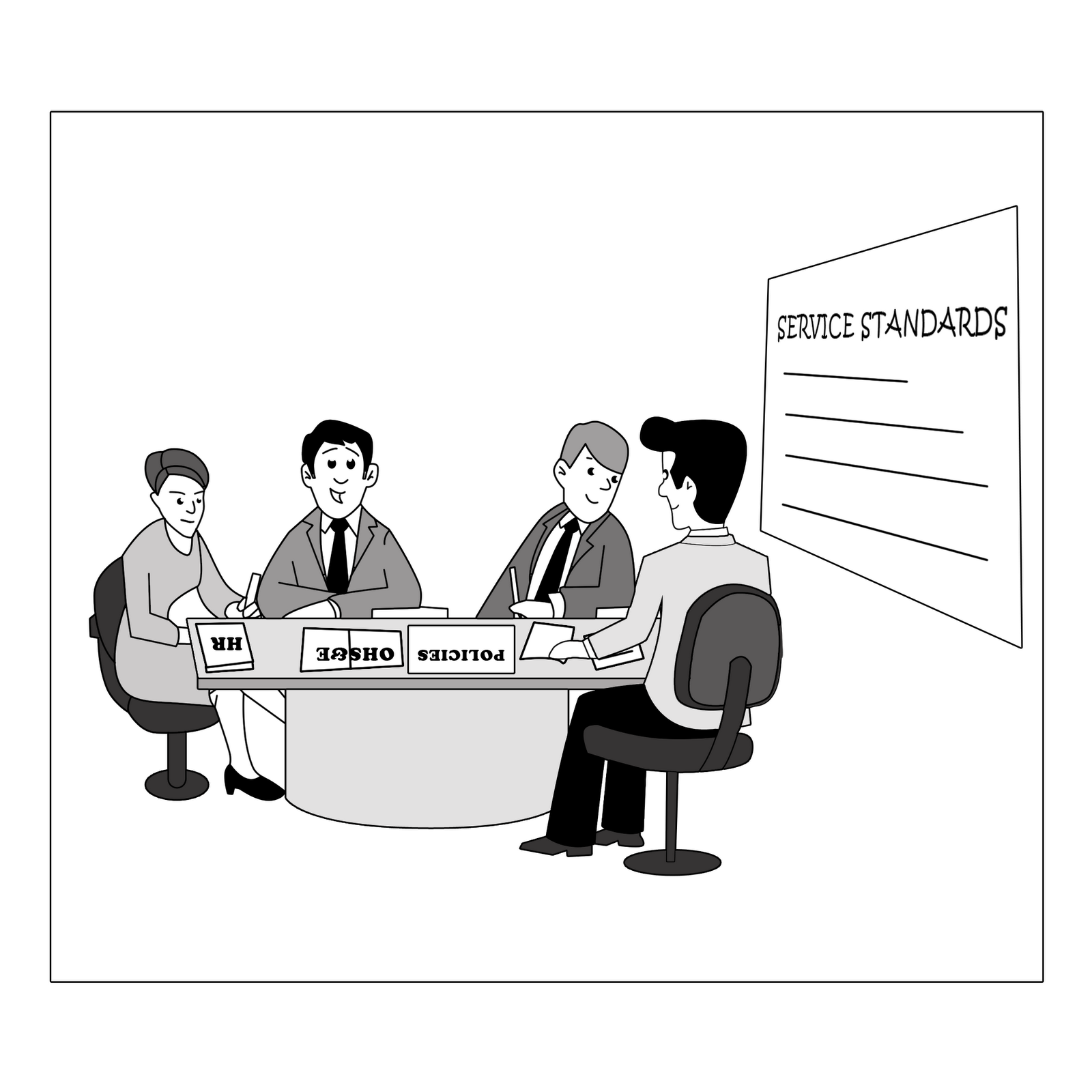
Service Standards exist so that we can create Great Service

Service standards are the in-house systems and processes, policies and procedures that your organisation has created to give it every possible chance of meeting and exceeding the expectations of its customers.

They create the possibility of consistency while allowing the people in your organisation to make decisions that lead to improved service outcomes. It is not always necessary to create new service standards; many of them already exist in operating manuals, rules, procedures and policies.

The challenge is to determine whether they support or hinder great service. The ‘bureaucracy busting’ of the GE Workout program (The Boundaryless Organisation by Ashkenas, Ulrich, Jick, & Kerr, 1995) is an example of a process that at its very heart was about ensuring the company’s systems and processes remained aligned to serving people and achieving the organisation’s goals.

Copyright Gary Ryan 2011

Research Participant
We think that it is great when a new person starts work here. We encourage them to ask questions. So they do. “Why does this policy and that policy exist?” That’s what they ask. And if we haven’t got a genuine answer, then we seriously look at the policy or procedure and change it if it is no longer helping us to serve our customers.
Gary Ryan enables individuals, teams and organisations to matter.
Visit Gary at http://garyryans.com

Human error drives the service – delivery gap

Gap 3 – The Service – Delivery Gap
Even after all the systems and processes have been created, both the automated and human elements of the system must do what they are supposed to do. System errors or breakdowns and humans not doing what they are supposed to do can create immediate service gaps. No system or human is perfect or infallible. As such your organisation must continually focus on minimising system and human errors. In addition, know what you will do if a Service Delivery Gap does occur. 
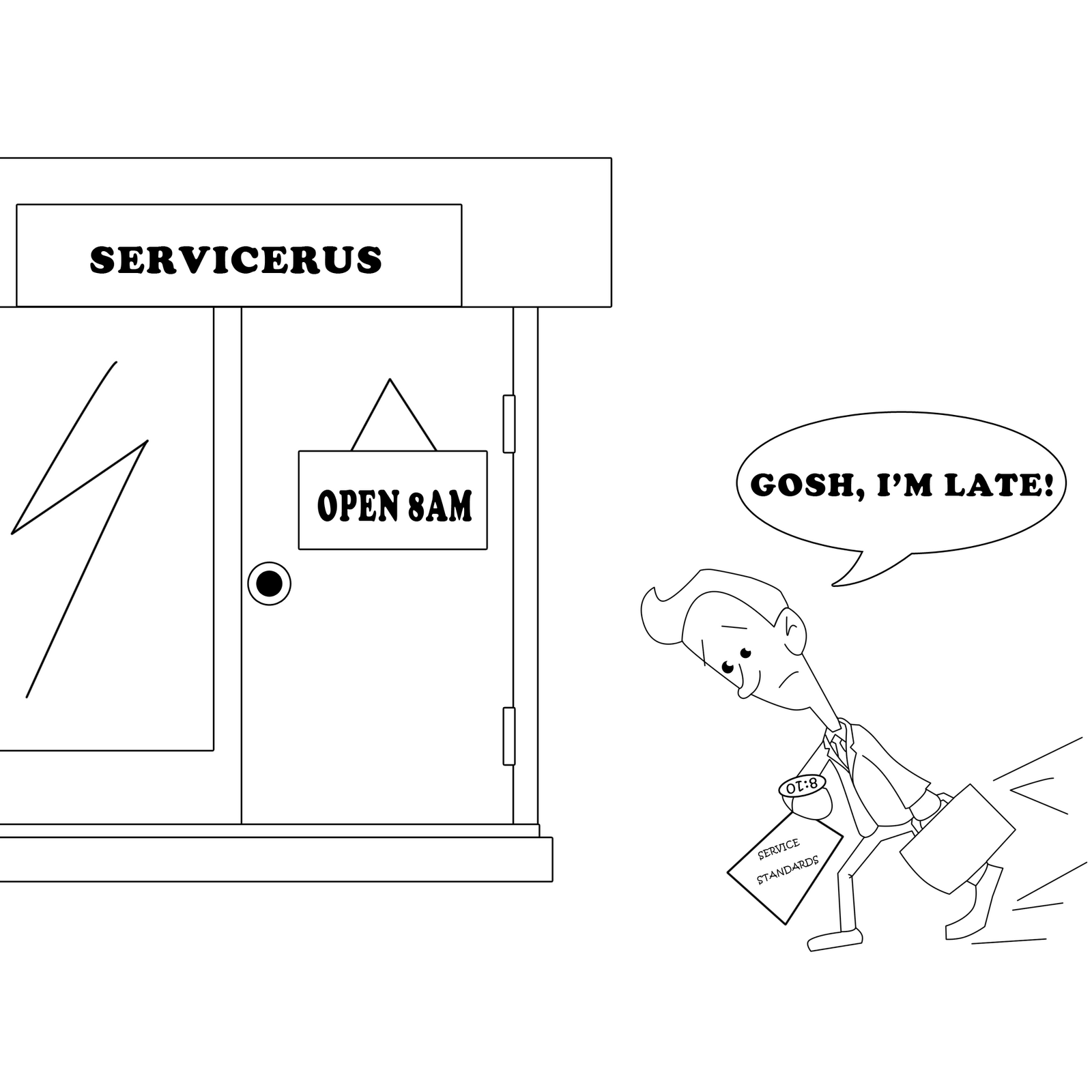
A local small business operator has a sign on his door that he will open at 8am. His staff are never there by 8am despite being employed to be there at that time. Consistently being late on a personal level creates a service delivery gap for an organisation.
What are your service-delivery gaps?
Copyright Gary Ryan 2011
Quote from a research participant
Ultimately your staff have to do the right thing. It’s important to have the best systems and processes that you can, but ultimately your staff have to do the right thing. They have to properly implement what they are supposed to do.
Gary Ryan enables individuals, teams and organisations to matter.
Visit Gary at http://garyryans.com

If you think that 8M Australians with poor job skills means you are guaranteed a great career, think again!

A report by Australia’s Industry Skills Councils to the Australian Federal Government has warned that up to eight million Australians don’t have the necessary numeracy and literacy skills to train for a trade or a profession.

The Report provides both bad & good news

The report also notes that over the next five years Australia will experience an estimated shortage of 215,000 skilled workers.

On the surface this may look like statistics that are extremely positive for current professionals and skilled employees. Why? Because the statistic highlight how poor the competition for skilled and professional jobs is at this point in time.

There is little to argue against this fact.

However, skilled workers and professionals need to think again. The lack of a skilled workforce and the extremely high number of people with low numeracy and literacy skills will increase the pressure on current skilled workers and professionals. Why? Because they are going to be the ones leading and managing the rest of the workforce. So the requirement for highly developed leadership and management skills are going to be paramount.

Getting and job and staying in employment for skilled workers and professionals will be virtually guaranteed (providing you are prepared to go where the work is located), however this doesn’t guarantee a great career. You will absolutely need to continue to develop your skills and employability so that you have the skills sets to lead and manage the rest of the workforce. These skill sets will continue to grow in demand and it is the people who really know how to lead and manage, and can demonstrate their skills through their track record will be the ones who will be “guaranteed” a great career.

What are you doing to enhance your leadership and management skills even if you have been leading and managing for a long time?

Gary Ryan enables individuals, teams and organisations to matter.
Visit Gary at http://garyryans.com

Monash PAL Leaders prove that we’re in good hands with Gen Y

My work results in me working with Gen Zers through to Builders. Not a bad spread, is it!

Often Gen Xers, Baby Boomers and Builders bemoan Gen Y.

“They want everything now”, “They are selfish”, “They don’t understand loyalty”, “It’s all them!” are statements I regularly hear.

But Gen Y are as selfless, community focused and loyal as any other generation.

I have proof.

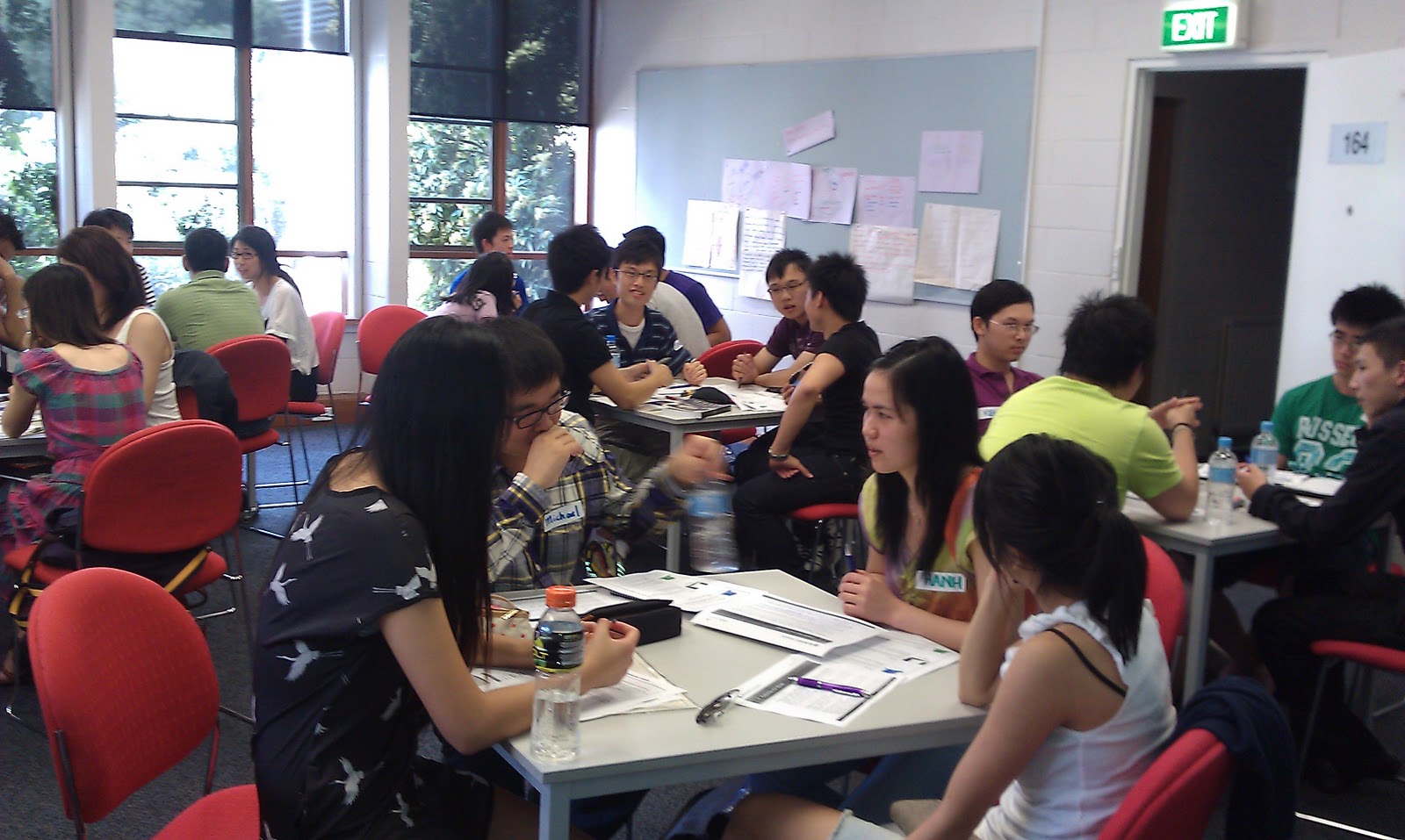
Some of the work I do with developing leaders has me working with students in various leadership programs for universities based in Melbourne, Australia. One such program, the PAL Program for the Faculty of Business and Economics at Monash University has students experiencing a range of developmental programs over a three year period. In their final year of the program the students create community based projects.

They give up their time to generate and manage sustainable projects. Last weekend 56 students gave up half of their Saturday (it was a beautiful 29 degree day too) to go through a facilitated process to create projects. Next Saturday the students will complete the first phase of this process as each ‘project team’ will participate in a workshop to ‘launch’ their project and enhance the probability of achieving their desired project outcomes.

Each project must fulfil at least one of the following principles:

  1. Enhance the students to student experience
  2. Enhance the student to faculty experience
  3. Enhance the Faculty/University to community experience

The projects often end up raising awareness for charities and/or current domestic/world events. Ultimately, the students do make a positive difference through their actions (which are all in addition to their studies, part time work and anything else they might be doing with their lives). If nothing else their projects create a sense of community and belonging for students, factors that are extremely important and cannot be underestimated in terms of student well being and mental health.

A significant purpose of the program is to enhance the employability of the students by providing them with real opportunities to do real work. Universities recognise the importance of creating well rounded students who understand theory and are also able to put theory into practice. Over many years of facilitating these programs I can say that they do enhance the employability of the students. The lessons that arise from working with other talented people, within tight timeframes and limited resources (often there is no money available for the projects – the students have to generate the income they require for the projects to be funded – which create a wonderful ‘mind-shift regarding money that is invaluable) are practical, real and powerful for the students.

After each day of completing my work with these students I always walk away with high energy levels and heightened sense of positivity regarding our future. These students do care about more than themselves, they are selfless and willing to give of their precious time for a higher purpose and most importantly they do make a positive difference. Our future really is in good hands.

I look forward to sharing their successes later this year.

Gary Ryan enables individuals, teams and organisations to matter.
Visit Gary at http://garyryans.com

If you listen, service excellence follows

The capacity to listen is probably the most important skill that relates to service excellence. Without this capacity staff will not know the expectations of their customers, each other, or the key stakeholders of their communities. Organisations that provide great service are fantastic listeners; to their customers, to their key stakeholders and to each other within the organisation.

William Isaacs (1999) notes that our culture is dominated by sight. Light moves at 186,000 miles per second, yet sound only travels at 1,100 feet per second. In summary, William Isaacs says that in order to listen we must slow down.

How do you and/or your organisation slow down to listen?

Quote
Our hearing puts us on the map. It balances us. Our sense of balance is intimately tied to our hearing; both come from the same source within our bodies…Hearing is auditory, of course, relating to sound. The word auditory…most ancient root means “to place perception.” When we listen, we place our perceptions. (William Isaacs, lecturer at MIT Sloan School of Management, consultant and author)

Gary Ryan enables individuals, teams and organisations to matter.
Visit Gary at http://garyryans.com