Category Archives: Employability

Expert Tip – Motivation Factor 4

In the fifth of the short videos in the 11 part series on how to create motivated employees, I share the fourth of 10 key factors that when present will collectively enhance the motivation of your team members/employees.

How do you rate for this factor?

Gary Ryan enables individuals, teams and organisations to matter.
Visit Gary at http://garyryans.com

How strategy and S&Ps support great service

All staff, whether the CEO or the lowest paid employee in the organisation have a high sense of job satisfaction when they are able to serve their customers properly. When systems & processes exist to support the passion of people, great service can flow through an organisation.

The staff satisfaction that comes from providing great service is an outcome of the support that an organisation’s strategy and systems & processes provide for the staff members when they are in the act of providing their service. In turn, this type of internal relationship results in a virtuous cycle that generates great service at the customer interface, whether internal or external to the organisation.

In this sense, it is absolutely vital that systems & processes support staff in building positive relationships with clients, customers and stakeholders. Without this support delivering great service and staff job satisfaction fall through the floor.

How well do your organisation’s systems & processes support staff to deliver great service?

Copyright Gary Ryan 2011

Relationship employees work harder and smarter. They care about the business, its future, its destiny. The business becomes their business. 
Leonard L Berry – researcher and author
Gary Ryan enables individuals, teams and organisations to matter.
Visit Gary at http://garyryans.com

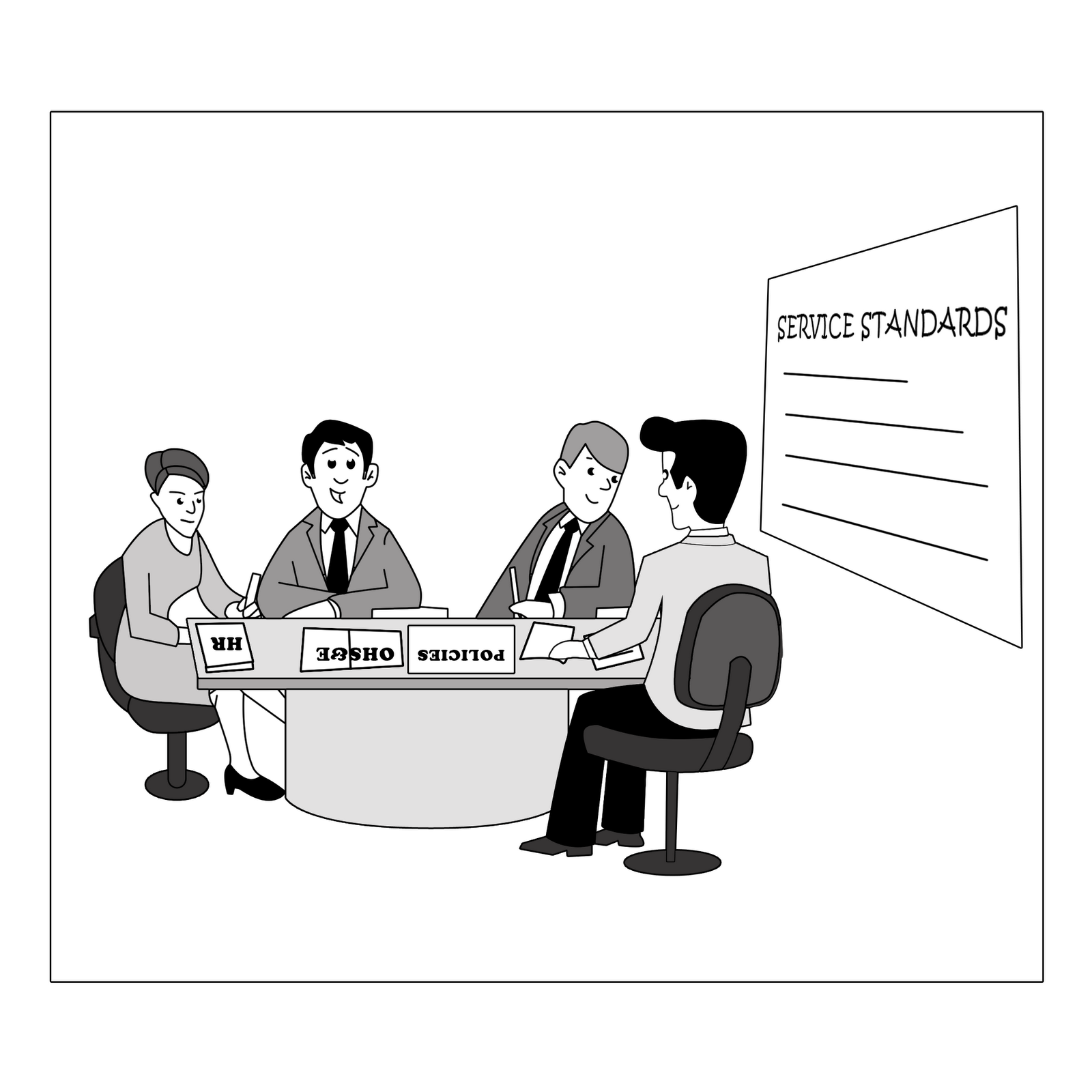
Service Standards exist so that we can create Great Service

Service standards are the in-house systems and processes, policies and procedures that your organisation has created to give it every possible chance of meeting and exceeding the expectations of its customers.

They create the possibility of consistency while allowing the people in your organisation to make decisions that lead to improved service outcomes. It is not always necessary to create new service standards; many of them already exist in operating manuals, rules, procedures and policies.

The challenge is to determine whether they support or hinder great service. The ‘bureaucracy busting’ of the GE Workout program (The Boundaryless Organisation by Ashkenas, Ulrich, Jick, & Kerr, 1995) is an example of a process that at its very heart was about ensuring the company’s systems and processes remained aligned to serving people and achieving the organisation’s goals.

Copyright Gary Ryan 2011

Research Participant
We think that it is great when a new person starts work here. We encourage them to ask questions. So they do. “Why does this policy and that policy exist?” That’s what they ask. And if we haven’t got a genuine answer, then we seriously look at the policy or procedure and change it if it is no longer helping us to serve our customers.
Gary Ryan enables individuals, teams and organisations to matter.
Visit Gary at http://garyryans.com

Great service connects staff to your organisation

Good service organisations connect their staff to the organisation in many ways.

Staff feel a regular and consistent level of achievement, job security and engagement with their organisation when service is alive and well. In this context, service lives from staff member to customer, staff member to staff member, manager to direct reports, direct reports to manager and so on.

Staff may even be connected to the organisation after they leave. This is also good business. Good service organisations understand that it is better to train staff and have them leave than to not train them and have them stay. Some jobs simply aren’t for life – and shouldn’t be! The nature of some jobs is that the staff performing the roles should develop and move on from the role.

If it is possible for them to move inside the organisation, then those opportunities will be provided. Often, the staff member needs to leave the organisation to continue to develop. This is okay.

Maintaining a connection with ex-staff can create a larger customer base, opportunities to move into new markets and a potential network of like-minded people who can sporn opportunities to and from each other. There is nothing wrong with being explicit about these hopes when good staff leave. Once again, it is simply good business.

How are your staff conencted to your organisation?

Copyright Gary Ryan 2011

“All internal efforts, programs and processes have to be geared towards maintaining or improving the external performance of the firm”
Christian Gronroos, Researcher and Author
Gary Ryan enables individuals, teams and organisations to matter.
Visit Gary at http://garyryans.com

United Breaks Guitars – A classic ‘service gone wrong’ story

When a fellow passenger called out, “My God they’re throwing guitars out there!” Canadian singer/songwriter Dave Carroll was horrified when he realised the guitars were his.

With his guitar broken and horribly damaged Dave spent 12 months chasing United Airlines to pay for the damage they had caused. With nothing less than indifference, United Airlines did not offer a sincere apology nor did they fix his guitar and repay Dave for the cost of repairing his equipment.

So Dave and his band, Sons of Maxwell, did what they do best. They wrote a song (and then a second one) about their experience and released it on YouTube.

The song was an immediate YouTube ‘hit’ and you can see that there have been currently over 10.5 million ‘hits’ on the song.

Within a day of the release of the song United’s share price had dropped by 10%. The value of the drop in shareprice could have bought Dave 51,000 guitars.

The moral of this story is that we live in exponential times. Not every story will go ‘viral’ – but you just don’t know which ones will. If a company gets something wrong, which does happen from time to time, then the best thing to do is to fix it as fair and fast a way as possible.

The OTM Service Strategy® is a system that has been designed to enhance an organisations capacity to provide a consistent and continuously improving system for service excellence. Contact me if you would like to arrange a conversation regarding how the OTM Service Strategy® could benefit your organisation.

Gary Ryan enables individuals, teams and organisations to matter.
Visit Gary at http://garyryans.com

Understanding expectations means you are a chance to exceed expectations

Understanding expectations is the starting point for great service. 
If you don’t understand the expectations of your customers, then everything that you do is likely to contribute to failing to meet them. 
Customers will have expectations whether you understand them or not. They usually consist of outcome factors and process factors and have a zone of tolerance for them to be acceptable. The outcome factors relate to the reliability of the service/product and determine whether the service/product meets the customer’s expectations. The process factors relate to the customers experience and will determine if the customer’s expectations have been exceeded or not.
People know if their expectations have, at least been met. They also know when they haven’t.
You know this to be true because you are a customer. A very experienced customer.
How are you ensuring that you understand the outcome and process factors that affect whether or not you are delivering, at a minimum what your customers expect?

Why not use this article to catalyse Conversations That Matter® within your team or organisation.

Copyright Gary Ryan 2011
Research Participant
Once you realise that the starting point is understanding expectations, everything else becomes a whole lot easier. All you have to do is ask people what they want, and then do your best to deliver that to them.
Gary Ryan enables individuals, teams and organisations to matter.
Visit Gary at http://garyryans.com

Great service includes our value to the community

Gary Ryan explains that organisations need to consider the value that they provide to their global, regional and local communities. In doing so organisations create a sustainable relationship with their community and it is critical that they communicate the value they provide.

Sustainability means many things these days. It includes environmental issues and the methods and approaches we humans are using to ensure that our earth is habitable for humans in the future.

It also means organisational sustainability which has been brought to everyone’s attention by the Global Financial Crisis. Organisations must be financially responsible to ensure they survive into the future. They must also be sustainable within our local communities, creating jobs and contributing to the local economy within which our organisations operate.

In this way service excellence can be a tool to assist Organisations in identifying and outlining their value to their community.

What is the value that your organisation provides to its community from the highest to the most local levels?

Copyright Gary Ryan 2011

Research Participant
When it is all said and done, if we disrespect the communities within which we live, we’re out of business.

Gary Ryan enables individuals, teams and organisations to matter.
Visit Gary at http://garyryans.com

Understanding Expectations at a Deeper Level

Gary Ryan explains five dimensions that need to be understood if you wish to meet and exceed customer expectations.

Research by Parasuraman, Berry and Zeithaml (1991) and re-enforced by many others established that customer expectations are generally fairly basic. They expect organisations to do what they are supposed to do. The more they pay the higher the level of service they expect, but they don’t expect poor service just because they may pay a low price. There is a basic level of service that is expected irrespective of price. An interesting finding is that customers expect organisations to ‘play fair’.
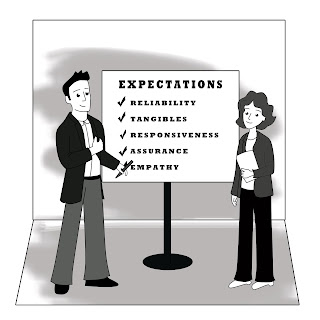
There are five dimensions to customer expectations. These include reliability, tangibles, responsiveness, assurance and empathy. Reliability is the outcome of the service. Tangibles usually relate to the appearance of the physical features of the service while the service is being experienced. Responsiveness is the willingness to assist and to provide prompt service when the service is being experienced. Assurance is the knowledge of employees and their level of courtesy while the service is being experienced. Empathy is the ‘care factor’ shown by employees. Do they genuinely care about their customers?
The reliability dimension is critical with regard to meeting customer expectations. The other four dimensions are critical in exceeding customer expectations.
Finally, customer expectations include a range from a desired level down to an adequate level. The range can vary from customer to customer and from service/product to service/product.
Let’s look at a common internal service, salary processing. Let’s assume that the system is set up for people to be paid on a Tuesday night. When people wake up on a Wednesday morning they expect their pay to be in their bank account. Assuming their has been a hiccup in the system, receiving their pay sometime on Wednesday morning may represent the adequate level of the service for most people. Wednesday afternoon may be too late for the majority of people and their focus may have shifted from performing their jobs to worrying about when they will be paid. Not a good scenario! The range of tolerance for the customer expectations associated with this service will have been exceeded.
The point here is that most services and products have a range of tolerance. This issue is, do you know the range for your products/services. If you go beyond this range of tolerance then you will have little if no chance of meeting the expectations of your customers.
Copyright Gary Ryan 2011
Quote from a research participant
Knowing the expectations of the people you serve is paramount if you want to be successful.
Gary Ryan enables individuals, teams and organisations to matter.
Visit Gary at http://garyryans.com

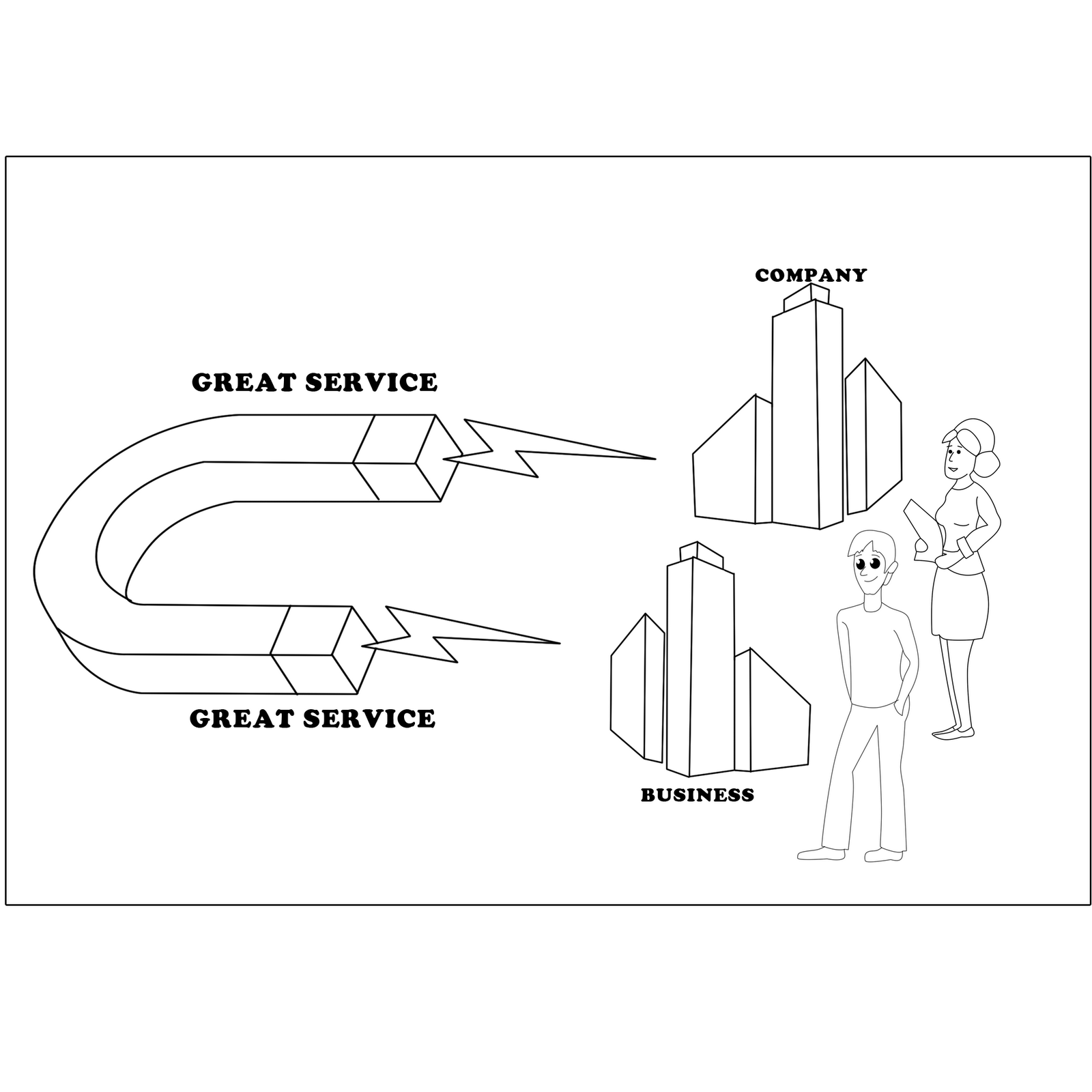
Great Service Attracts Customers

While it isn’t rocket science, many people and organisations forget that consistently providing great service attracts customers to your organisation. Referencing long time researcher and author Leonard L Berry, Gary Ryan explains this fundamental concept.

Leonard Berry (1995) has long advocated that great service attracts customers. This is because there are so many companies who are poor at service delivery.

It is therefore easy for customers to differentiate between good and poor service companies and providing the benefit that the customer receives is more than their burden for obtaining that service or product, customers will continue to be attracted to great service.

Berry also highlights that a large benefit of great service is that positive word-of-mouth advertising is generated by great service. The internet has made that easier than ever. People use Facebook every day to ‘Like’ positive updates about products and services from their friends. The same is also true for poor service.

Great service attracts customers. Poor service pushes them away.

Which category is your organisation in?

Copyright Gary Ryan 2011

Quote from a research participant
For a long period of time my friend had been telling me about this bakery near where she lives. Finally I went there. She was right! The people and the ‘taste bud delights’ were fantastic! You should go there too.

Join Gary at the OTM Academy to discover more about the OTM Service Strategy and creating an organisation that matters!

Gary Ryan enables individuals, teams and organisations to matter.
Visit Gary at http://garyryans.com
Who is The Customer?

Many people don’t like the term ‘customer service’ for good reason. However, this doesn’t mean that the principles of ‘service excellence’ don’t apply to how they go about doing their work. Gary Ryan explains how ‘service excellence’ enables you to exceed expectations no matter what you call your ‘customers’.

Many people get hung up on the word ‘customer’. This is the challenge with the concept of ‘customer service’ because many people think that they don’t have ‘customers’. And maybe they don’t. Maybe they have clients, colleagues, administrators, staff, stakeholders, lawyers, doctors, labourors, community members, students, guests and any other label that you can think about. The issue is not the label; the issue is the ethic behind how you treat people.
Another way of looking at it is to say that ‘the customer’ is anyone who receives the output of your work. Anyone.
This is why we prefer the term, “service excellence” over “customer service”. Unfortunately many people think that they don’t have ‘customers’ (because they use a different term) so they conclude that service has nothing to do with them. But it has everything to do with them. Everyone is your customer. Everyone.

Copyright Gary Ryan 2011

Research Participant
You know that I can’t stand the word ‘customer’. The people I serve are staff, not customers. I find out what they want and I do my best to exceed their expectations every time. So I wish people would stop saying that I have to be ‘customer’ oriented. I’m staff oriented and that is what is important!

Gary Ryan enables individuals, teams and organisations to matter.
Visit Gary at http://garyryans.com