Visit Gary at http://garyryans.com
Discover the Seven Skills of Dialogue
Visit Gary at http://garyryans.com
In the eighth of the short videos in the 11 part series on how to create motivated employees, I share the seventh of 10 key factors that when present will collectively enhance the motivation of your team members/employees.
How do you rate for this factor? How does your employer rate for you?
In the seventh of the short videos in the 11 part series on how to create motivated employees, I share the sixth of 10 key factors that when present will collectively enhance the motivation of your team members/employees.
How do you rate for this factor? How does your employer rate for you?
In the sixth of the short videos in the 11 part series on how to create motivated employees, I share the fifth of 10 key factors that when present will collectively enhance the motivation of your team members/employees.
How do you rate for this factor?
In the fifth of the short videos in the 11 part series on how to create motivated employees, I share the fourth of 10 key factors that when present will collectively enhance the motivation of your team members/employees.
How do you rate for this factor?
In the fourth of the short videos in the 11 part series on how to create motivated employees, I share the third of 10 key factors that when present will collectively enhance the motivation of your team members/employees.
How do you rate for this factor?
What Really Matters! Volume 3, Number 2, 2011 is a collection of articles posted on the OTM Academy from April 1st to June 30th 2011.
The articles are written for Senior and Developing Leaders who share our belief that organisational success is achieved through enabling people to achieve peak performance.
Articles include:
You can download the ebook here.
We advise that you view the ebook in ‘fullscreen’ mode. Press the escape key to return to this page.
Please share your comments regarding the ebook below.
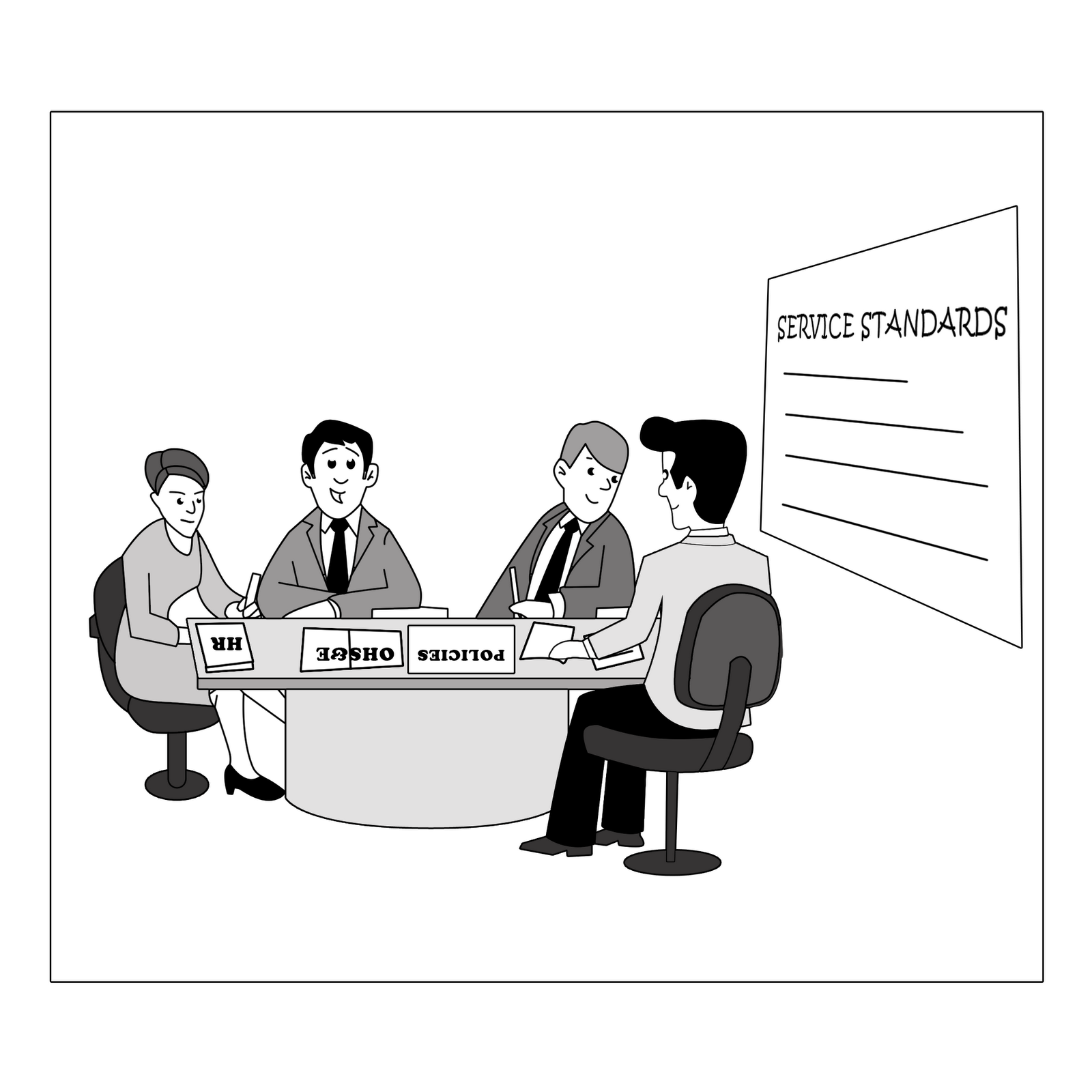
Service standards are the in-house systems and processes, policies and procedures that your organisation has created to give it every possible chance of meeting and exceeding the expectations of its customers.
They create the possibility of consistency while allowing the people in your organisation to make decisions that lead to improved service outcomes. It is not always necessary to create new service standards; many of them already exist in operating manuals, rules, procedures and policies.
The challenge is to determine whether they support or hinder great service. The ‘bureaucracy busting’ of the GE Workout program (The Boundaryless Organisation by Ashkenas, Ulrich, Jick, & Kerr, 1995) is an example of a process that at its very heart was about ensuring the company’s systems and processes remained aligned to serving people and achieving the organisation’s goals.
![]() |
| Copyright Gary Ryan 2011 |
Over and over in the programs that I facilitate for both Senior and Developing leaders I am asked this question, “Gary, how do I motivate my team members?”
Below is the first short video in a an 11 part series that answers this question.
A report by Australia’s Industry Skills Councils to the Australian Federal Government has warned that up to eight million Australians don’t have the necessary numeracy and literacy skills to train for a trade or a profession.

![]() |
| The Report provides both bad & good news |
The report also notes that over the next five years Australia will experience an estimated shortage of 215,000 skilled workers.
On the surface this may look like statistics that are extremely positive for current professionals and skilled employees. Why? Because the statistic highlight how poor the competition for skilled and professional jobs is at this point in time.
There is little to argue against this fact.
However, skilled workers and professionals need to think again. The lack of a skilled workforce and the extremely high number of people with low numeracy and literacy skills will increase the pressure on current skilled workers and professionals. Why? Because they are going to be the ones leading and managing the rest of the workforce. So the requirement for highly developed leadership and management skills are going to be paramount.
Getting and job and staying in employment for skilled workers and professionals will be virtually guaranteed (providing you are prepared to go where the work is located), however this doesn’t guarantee a great career. You will absolutely need to continue to develop your skills and employability so that you have the skills sets to lead and manage the rest of the workforce. These skill sets will continue to grow in demand and it is the people who really know how to lead and manage, and can demonstrate their skills through their track record will be the ones who will be “guaranteed” a great career.
What are you doing to enhance your leadership and management skills even if you have been leading and managing for a long time?