Category Archives: Leadership

Monash PAL Leaders prove that we’re in good hands with Gen Y

My work results in me working with Gen Zers through to Builders. Not a bad spread, is it!

Often Gen Xers, Baby Boomers and Builders bemoan Gen Y.

“They want everything now”, “They are selfish”, “They don’t understand loyalty”, “It’s all them!” are statements I regularly hear.

But Gen Y are as selfless, community focused and loyal as any other generation.

I have proof.

Some of the work I do with developing leaders has me working with students in various leadership programs for universities based in Melbourne, Australia. One such program, the PAL Program for the Faculty of Business and Economics at Monash University has students experiencing a range of developmental programs over a three year period. In their final year of the program the students create community based projects.
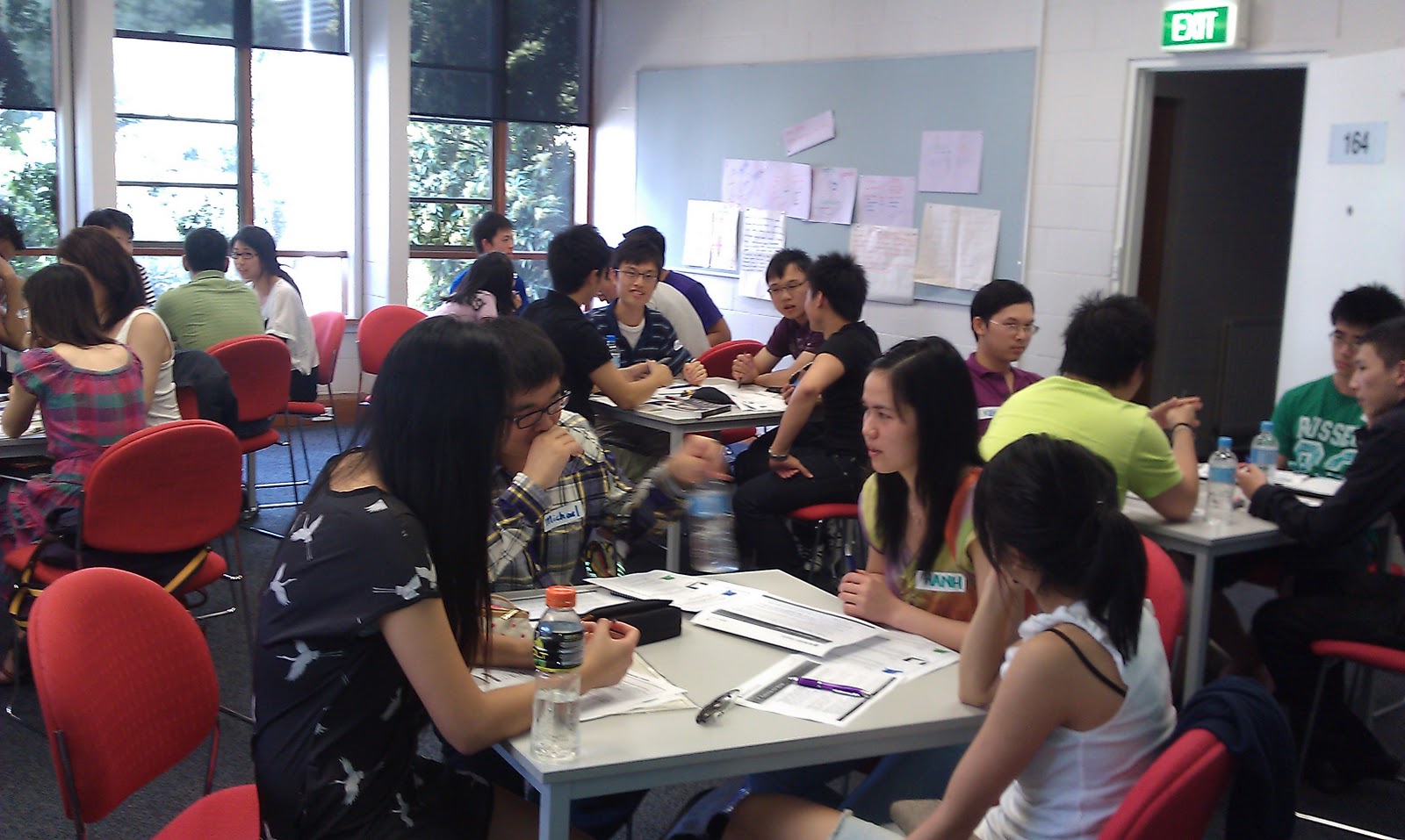
They give up their time to generate and manage sustainable projects. Last weekend 56 students gave up half of their Saturday (it was a beautiful 29 degree day too) to go through a facilitated process to create projects. Next Saturday the students will complete the first phase of this process as each ‘project team’ will participate in a workshop to ‘launch’ their project and enhance the probability of achieving their desired project outcomes.

Each project must fulfil at least one of the following principles:

  1. Enhance the students to student experience
  2. Enhance the student to faculty experience
  3. Enhance the Faculty/University to community experience

The projects often end up raising awareness for charities and/or current domestic/world events. Ultimately, the students do make a positive difference through their actions (which are all in addition to their studies, part time work and anything else they might be doing with their lives). If nothing else their projects create a sense of community and belonging for students, factors that are extremely important and cannot be underestimated in terms of student well being and mental health.

A significant purpose of the program is to enhance the employability of the students by providing them with real opportunities to do real work. Universities recognise the importance of creating well rounded students who understand theory and are also able to put theory into practice. Over many years of facilitating these programs I can say that they do enhance the employability of the students. The lessons that arise from working with other talented people, within tight timeframes and limited resources (often there is no money available for the projects – the students have to generate the income they require for the projects to be funded – which create a wonderful ‘mind-shift regarding money that is invaluable) are practical, real and powerful for the students.

After each day of completing my work with these students I always walk away with high energy levels and heightened sense of positivity regarding our future. These students do care about more than themselves, they are selfless and willing to give of their precious time for a higher purpose and most importantly they do make a positive difference. Our future really is in good hands.

I look forward to sharing their successes later this year.

Gary Ryan enables individuals, teams and organisations to matter.
Visit Gary at http://garyryans.com

Re-discovering the ‘non-virtual’ world

You may find the title of this article intriguing, “Re-entering the ‘non-virtual world.”

What is the ‘non-virtual’ world?

For me it is the present world, the real world. Early this week I was walking across a bridge over the Yarra River. The early morning sun was rising in the east to a back drop of a beautiful clear sky in various hues of blue. The Melbourne city skyline looked magnificent.

At first I continued walking. After all I still had a bit of a walk ahead of me before I reached the building in Melbourne’s financial district where I was to meet my client. As I walked I had been going over my preparation for my meeting.

The view I saw was so stunning that I stopped. I remember thinking, “Gary, this is beautiful. Why don’t you stop and just take it in.”

You know the energy that you get when you see something beautiful. That’s how I felt viewing what was before me.

Then I noticed that everyone was rushing past me, seemingly unaware of the beauty before them. At a closer look I noticed the ear plugs. A very high percentage of people had them in their ears. Then I noticed something else. Despite the high number of people passing me, I didn’t hear a word of conversation.

I decided to take a photo of this beautiful scene using the camera in my phone. As I’m not a photographer my photo doesn’t do the view justice, but it is not too bad just the same.

As I reflected on this scene I began to wonder about the percentage of our lives that we live in the ‘non-virtual’ world. In other words, how much of our time is actually spent in the present? The present is a place where the world is alive right now. There is literally no past and no future. Just now, just this moment.

In terms of work this relates to our awareness of what is happening right now. How engaged are people with this meeting right now? How honest are people right now? What is the ‘energy’ within our office space like right now? How are staff treating each other right now?

As a fairly high user of the virtual world myself I am not advocating abandoning it. On the contrary I believe it has a valuable place in our lives and social media is just one example.

What I am talking about is balance. Sometimes I run with my iPod, but most often I don’t. I want to be in the present when I’m running, and I want to be able to use all my senses when I’m in it.

Being in the present means that I increase my chances of seeing and then being a part of beauty.

It was amazing how the energy that I received from the view from the bridge that morning sustained me through the day.

What are your experiences of re-discovering the ‘non-virtual’ world’?

Gary Ryan enables individuals, teams and organisations to matter.
Visit Gary at http://garyryans.com

If you listen, service excellence follows

The capacity to listen is probably the most important skill that relates to service excellence. Without this capacity staff will not know the expectations of their customers, each other, or the key stakeholders of their communities. Organisations that provide great service are fantastic listeners; to their customers, to their key stakeholders and to each other within the organisation.

William Isaacs (1999) notes that our culture is dominated by sight. Light moves at 186,000 miles per second, yet sound only travels at 1,100 feet per second. In summary, William Isaacs says that in order to listen we must slow down.

How do you and/or your organisation slow down to listen?

Quote
Our hearing puts us on the map. It balances us. Our sense of balance is intimately tied to our hearing; both come from the same source within our bodies…Hearing is auditory, of course, relating to sound. The word auditory…most ancient root means “to place perception.” When we listen, we place our perceptions. (William Isaacs, lecturer at MIT Sloan School of Management, consultant and author)

Gary Ryan enables individuals, teams and organisations to matter.
Visit Gary at http://garyryans.com

Why developing your people is at the heart of service excellence

Existing staff need to be developed so that they have the capacity to implement your Service Strategy. This will result in them having the capacity to understand the expectations of their customers and being able to develop appropriate service standards from that understanding.

New staff need to be recruited through processes that identify their alignment with your Service Strategy. This means that the organisation’s recruitment processes must reflect a process that is seeking the best possible people that it can find so that its Service Strategy can be implemented.

Quote from a research participant
Our recruitment policy used to be, “Do you know anyone who has a heartbeat and is available?”. Me, I’d been here 20 years and had never been on any training. I never realised how bad we were until I honestly thought about whether I’d like to be a customer of my own team. My answer was no!

How are staff recruited and developed in your organisation?

Gary Ryan enables individuals, teams and organisations to matter.
Visit Gary at http://garyryans.com

Leadership Insights Series – Michael Josem, Senior Manager, Game Security Team, PokerStars.com Webinar Recording

This is a recording of the first of our ‘Leadership Insights Series’ Webinars for 2011. Gary Ryan interviewed Michael Josem, a successful young professional who has created a highly successful career as a result of playing games!

Michael shares a series of turning points and decisions that enabled him to ‘out’ an online gaming fraud, which created a series of events that resulted in him being offered a job in the field of work associated with playing online poker, a passion of Michael’s that had developed while he was at university. One of these events resulted in Michael being interviewed on the USA 60 Minutes program for his role as an internet security expert in discovering the online fraud which result in over $20Million being returned to players.

With a strong sense of personal values Michael’s role involves ensuring that ‘fraud’ is kept out of the system and that online poker players all have a fair chance for success.

Michael shares how his practices of service excdllence, personal development and getting things done were shaped in his days as an elected student representative at university. If you have wondered how jobs such as Michael’s are discovered, or how online poker can be driven by an organisation with a strong sense of fairness and integrity, then view this 40 minute webinar, I’m sure you will find it intriguing.

Michael, in his late 20s shares his story and how his passion has him setting sail to work in the United Kingdom’s Isle of Man.

Length: 41:11

Gary Ryan enables individuals, teams and organisations to matter.
Visit Gary at http://garyryans.com

Success lessons from comic Marty Wilson

Marty Wilson interviewed over 400 inspirational people to write his best selling What I Wish I Knew series of books. As an author and stand up comic, three of the key lessons that Marty discovered from his research were:

1. Take risks
Successful people take risks. They don’t die wondering. Marty explains that risk taking is not about jumping out of aeroplanes. It could be as simple as being yourself at work and not following the crowd.

2. Recruit mentors
This is no suprise to me but successful people actively seek mentors and learn from them, both their successes and failures. Do you have a mentor?

3. Lighten up
Yes Marty is a comic, but the it was his interviewees who told him that laughter and the capacity to see the lighter side of life was critical to success. Sometimes, on the rough road of life, laughing is the only way to survive.

If you would like to read the full article by Dale Beaumont in his Business Blueprint online magazine, please read it here...

Gary Ryan enables individuals, teams and organisations to matter.
Visit Gary at http://garyryans.com

Service standards exist to enhance your capacity to meet and exceed customer expectations

Service standards are the in-house systems and processes, policies and procedures that your organisation has created to give it every possible chance of meeting and exceeding the expectations of its customers. They create the possibility of consistency while allowing the people in your organisation to make decisions that lead to improved service outcomes. It is not always necessary to create new service standards; many of them already exist in operating manuals, rules, procedures and policies.

The challenge is to determine whether they support or hinder great service. The ‘bureaucracy busting’ of the GE Workout program (Ashkenas, Ulrich, Jick, & Kerr, 1995) is an example of a process that at its very heart was about ensuring the company’s systems and processes remained aligned to serving people and achieving the organisation’s goals.

Quote from a research participant
We think that it is great when a new person starts work here. We encourage them to ask questions. So they do. “Why does this policy and that policy exist?” That’s what they ask. And if we haven’t got a genuine answer, then we seriously look at the policy or procedure and change it if it is no longer helping us to serve our customers.

How do your systems, policies and procedures enhance your capacity to meet and exceed the expectations of your customers?

Gary Ryan enables individuals, teams and organisations to matter.
Visit Gary at http://garyryans.com

A retail MBA in an article – BRW interview with Janine Allis

Rarely is an article written that captures the essence of what it takes to be a successful business person.

This recent article in BRW is an exception.

Kate Mills is able to draw from Janine Allis, founder of Boost Juice the core principles of her success, which include:

  • Maintaining focus and not being distracted from your core products/services
  • Understanding the basic factors that exist in the industry within which you operate
  • As an owner you have to really understand your business – including the parts that may not be in your areas of strength
  • You have to have and look after the right people
  • You must be tight with your spending
  • Focus on making the customer a fan
  • Look outside your box for ideas as catalysts for innovation
  • The willingness to work cannot be underestimated
  • Allis’ principles of success – her five Ps (People, Positioning, Product, Price, Promotion)

This article is well worth the five minutes it will take to read.

Let me know what you think!

Gary Ryan enables individuals, teams and organisations to matter.
Visit Gary at http://garyryans.com

Leadership Insights Series – Michael Josem, Senior Manager, Game Security Team, PokerStars.com

In the first of our ‘Leadership Insights Series’ Webinars for 2011, Gary Ryan will interview Michael Josem, a successful young professional who has created a highly successful career as a result of playing games!

Michael will share a series of turning points and decisions that enabled him to ‘out’ an online gaming fraud, which created a series of events that resulted in him being offered a job in the field of work associated with playing online poker, a passion of Michael’s that had developed while he was at university. One of these events resulted in Michael being interviewed on the USA 60 Minutes program for his role as an internet security expert in discovering the online fraud which result in over $20Million being returned to players.

With a strong sense of personal values Michael’s role involves ensuring that ‘fraud’ is kept out of the system and that online poker players all have a fair chance for success.

If you have wondered how jobs such as Michael’s are discovered, or how online poker can be driven by an organisation with a strong sense of fairness and integrity, then register for this 30 minute webinar, I’m sure you will find it intriguing.

Michael, in his late 20s will share his story and how his passion now has him setting sail to work from the Isle of Man.

Seats are limited for the exclusive webinar so please register now.

Seats are limited for the exclusive webinar so please register now.

Gary Ryan enables individuals, teams and organisations to matter.
Visit Gary at http://garyryans.com

Great service starts with identifying expectations

This is the starting point for great service. If you don’t understand the expectations of your customers, then everything that you do is likely to contribute to failing to meet them. Customers will have expectations whether you understand them or not. They usually consist of outcome factors and process factors and have a zone of tolerance for them to be acceptable.
The outcome factors relate to the reliability of the service/product and determine whether the service/product meets the customers’ expectations. The process factors relate to the customers experience and will determine if the customers’ expectations have been exceeded or not.

Quote from a research participant
Once you realise that the starting point is understanding expectations, everything else becomes a whole lot easier. All you have to do is ask people what they want, and then do your best to deliver that to them.

Gary Ryan enables individuals, teams and organisations to matter.
Visit Gary at http://garyryans.com